
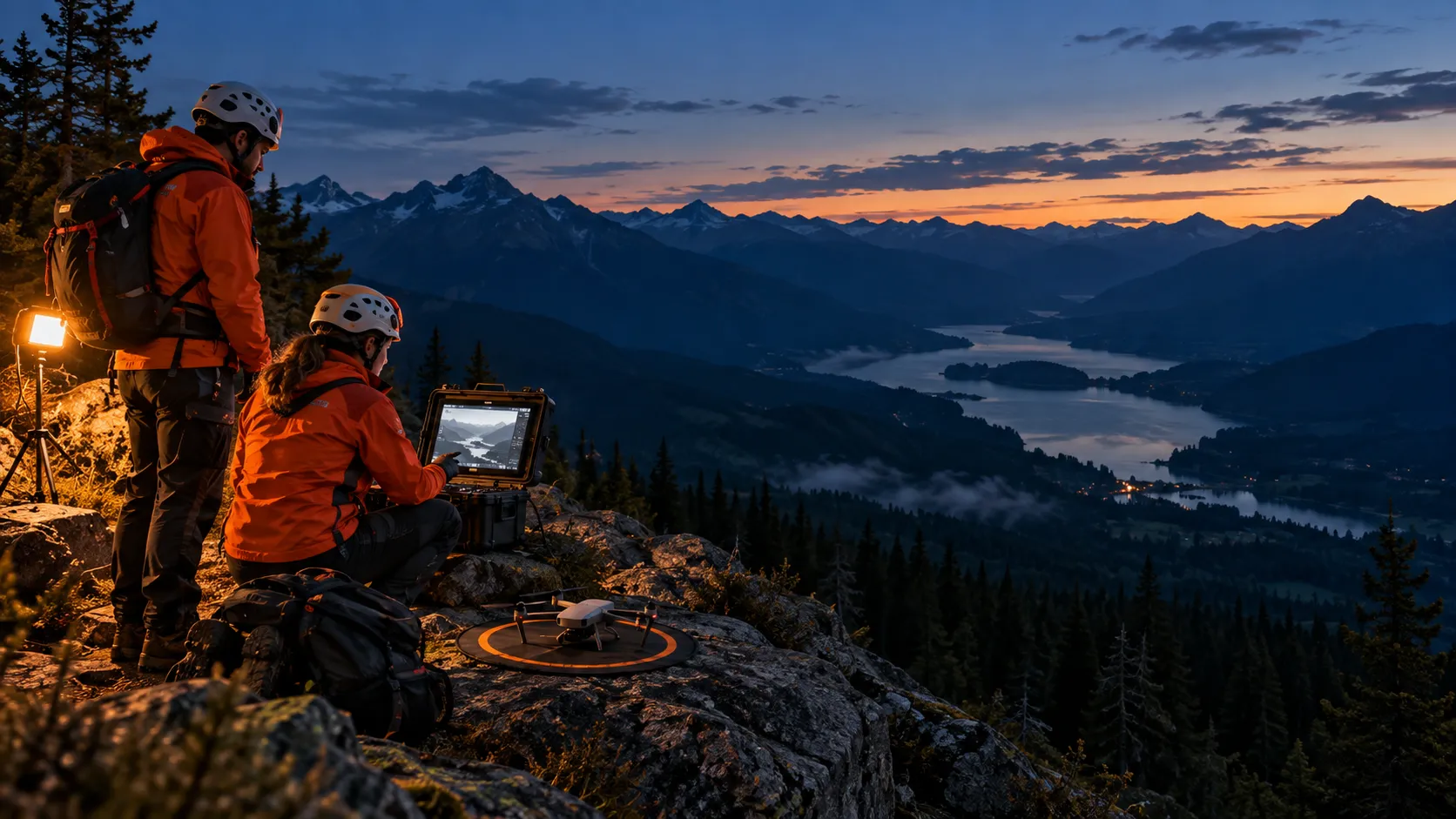
Illustrative civilian rescue volunteers with a camera drone and field monitor in a mountain landscape at dusk

Night Search & Rescue

A 3.3G 10W analog video link carries thermal camera images to a ground team searching for a missing hiker in mountainous terrain at night.

Application imagery is illustrative.

Night search. The customer’s case.

The supplied case describes a missing hiker, falling temperatures, dense vegetation and limited visibility that slowed the ground search.

  1. The challenge

    Ground teams and handheld thermal cameras had limited views across the mountainous search area. The proposed aerial system brings a thermal camera’s view back to a ground monitor.

  2. The proposed setup

    A medium-sized multirotor carries a 384 × 288 thermal camera with AV analog output and a 3.3G 10W transmitter. The ground station combines a high-gain directional antenna, Diversity dual reception and a monitor or FPV goggles.

  3. Reported outcome

    The customer reports locating the missing person in about 45 minutes and a maximum video transmission distance of 38 km, followed by a successful ground rescue. These are results described in the supplied case, not independently verified measurements or guaranteed search times and range.

From the search camera to the ground team.

Thermal camera with AV output → 3.3G 10W transmitter → Diversity receiving setup → ground monitor or FPV goggles.

  1. Thermal camera

    Video input
  2. Video transmitter (VTX)

    Wireless link
  3. Video receiver (VRX)

    Video output
  4. Ground monitor

The thermal camera provides the imaging capability. The VTX transmits its video signal; camera output, transmitter input and receiver compatibility need to match.

The search process.

A summary of the civilian rescue sequence described in the customer’s case.

  1. Plan the search area

    The team divided the area around the last known location into a grid and planned a systematic search route.

  2. Begin the night search

    The drone carried the thermal camera over the search area while its video was relayed to the ground station.

  3. Scan the terrain

    The operators reviewed the thermal view across the mountain search area for heat signatures that needed closer observation.

  4. Identify a possible person

    An operator noticed a heat signature that differed from the surrounding terrain and resembled a person.

  5. Confirm and share the location

    The team observed the location from multiple angles, identified the missing person and shared the marked location with ground rescuers.

  6. Support the ground rescue

    The drone continued providing an overhead thermal view while the ground team approached the person.

Related product.

Explore the transmitter featured in this application and its specifications.

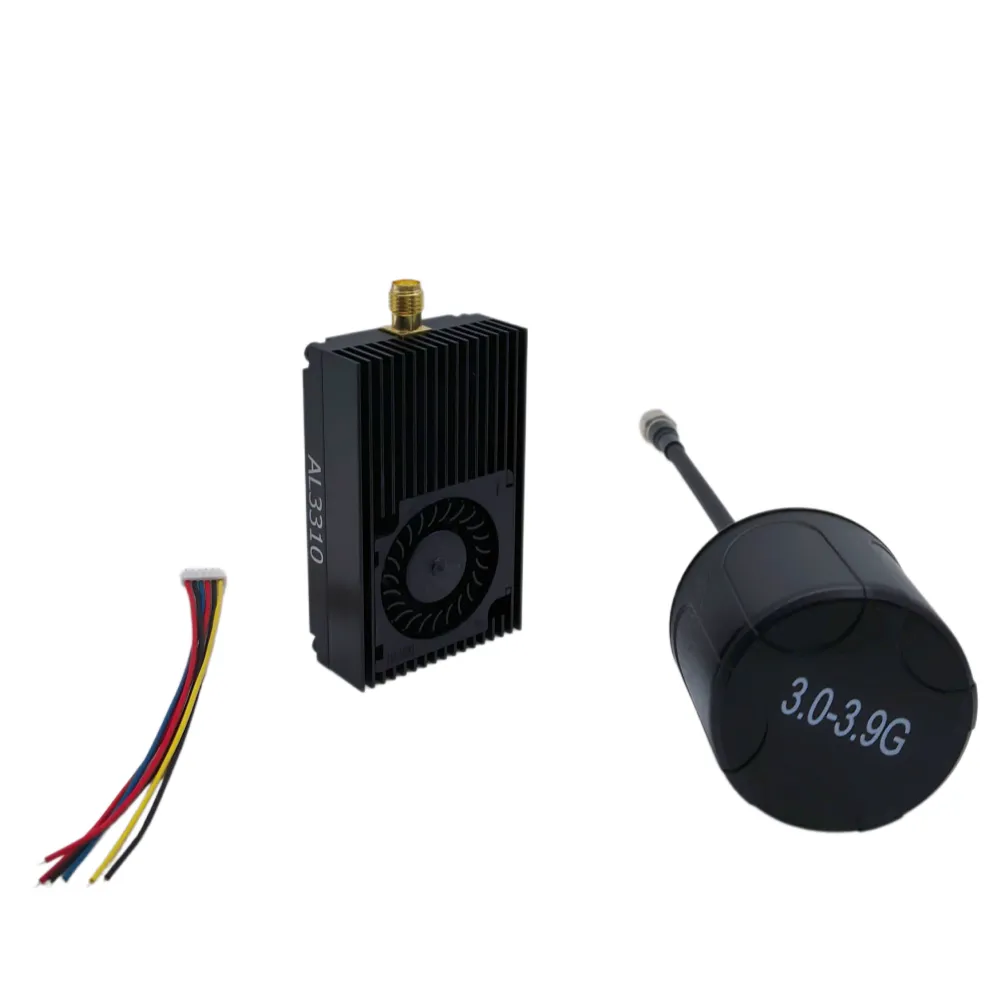
Shrimp B 3.3G 10W video transmitter

Shrimp B 3.3G 10W

The Shrimp B 3.3G 10W is the analog video transmitter featured in this application. It carries video from a compatible camera to receiving equipment.

Video input (typical)
1 V ±0.2 Vp-p
Body dimensions
58 × 36 × 16 mm
Mounting holes
20 × 20 mm
Input voltage
12–36 V

Match the camera’s analog video output to the transmitter input and check the receiver’s supported frequencies.

View product details

Case configuration.

Camera, aircraft and receiving equipment described in the supplied rescue case.

ComponentCase configuration
Flight platformMedium-sized multirotor with night-flight capability.
Thermal camera384 × 288 thermal camera with AV analog video output.
Video link and ground station3.3G 10W analog transmitter; high-gain directional antenna, Diversity dual reception and monitor or FPV goggles.
Onboard powerThe case describes a 12 V supply shared by the camera and transmitter. Each component’s voltage and current requirements must be compatible.

Application questions.

Key details about the video link.

Does the transmitter provide thermal imaging?

No. Thermal imaging is provided by the camera. The transmitter carries a compatible camera’s analog video signal to the ground receiver.

Can any thermal camera be used?

The camera needs a compatible analog video output. Share the camera model and its output specifications so the interface can be reviewed with the transmitter and ground receiver.

Discuss your search & rescue application.

Share the camera model, video interface and receiving equipment for your civilian rescue project.

Tell us about your project.

Share what you know. You can leave the optional fields blank.

Opens your email app. Review the draft and send it to our team.